Books

Prologue
The future of human history is first written by the authors of science fiction.
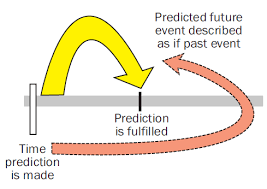
Source: Prophetic perfect tense, Wikipedia
highly non-respectable literature of science fiction (to which, unfortunately, nobody yet has paid the attention it deserves as a vehicle of mass sentiments and mass desires)
We can just do things, but should we?
There is no reason to doubt our abilities to accomplish …, just as there is no reason to doubt our present ability to destroy all organic life on earth. The question is only whether we wish to use our new scientific and technical knowledge in this direction, and this question cannot be decided by scientific means; it is a political question of the first order and therefore can hardly be left to the decision of professional scientists or professional politicians.
knowledge = how
thought = why
If it should turn out to be true that knowledge and thought have parted company for good, then we would indeed become the helpless slaves, not so much of our machines as of our know-how, thoughtless creatures at the mercy of every gadget which is technically possible, no matter how murderous it is.
Are we slaves to the techno-capital machine? Staring at the abyss of technocalvinism, in both its splendour and horror.

Source: Made in Abyss
The reason why it may be wise to distrust the political judgment of scientists qua scientists is not primarily their lack of “character”—that they did not refuse to develop
atomic weapons[AGI]—or their naivete—that they did not understand that once theseweapons[models] were developed they would be the last to be consulted about their use—but precisely the fact that they move in a world where speech has lost its power.
What good is freedom from labour for a Godless society that has already forgotten anything but labor?
Within this society … there is no class left, no aristocracy of either a political or spiritual nature from which a restoration of the other capacities of man could start anew.
Arendt has a solution, though
What I propose, therefore, is very simple: it is nothing more than to think what we are doing.
…men, no matter what they do, are always conditioned beings. Whatever enters the human world of its own accord or is drawn into it by human effort becomes part of the human condition. The impact of the world’s reality upon human existence is felt and received as a conditioning force.
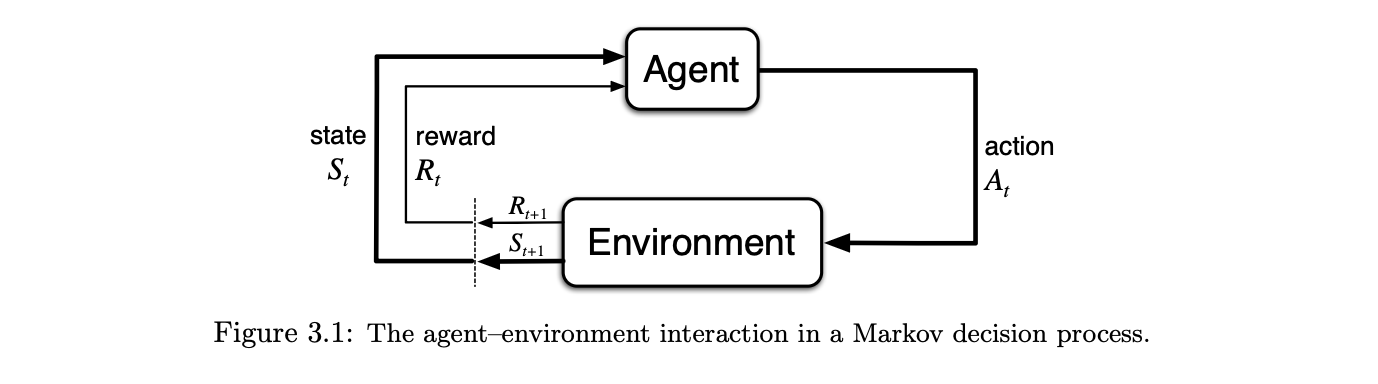
Source: Sutton & Barto, Reinforcement Learning: An Introduction
Human condition != Human nature
Chapter 1: Vita Activa and the Human Condition
Vita activa, the active life, consists of:
- Labor - biological necessities
- Work - what we do and make
- Action - plurality of humankind
Aristotle saw freedom as making possible only three ways of life:
- Pleasure, the hedonistic life
- Politics, the active life
- Philosophy, the contemplative life
Philosophy > Politics > Pleasure.
Politics is to be virtuous amongst men, and do excellent deeds.
Labor is the life of the slave.
Work is the life of the craftsmen, and the merchant.
To the Greeks,
Vita contemplativa > vita activa
In modern philosophy, Marx and Nietzsche claim
Vita activa > Vita contemplativa
The Greeks saw not only their gods, but also animals as immortal. Animals are all the same species, and have no distinction, so one is replaced by another.
Only men are mortal. No two men are alike — they are individuals.
This individual life is distinguished from all other things by the rectilinear course of its movement, which, so to speak, cuts through the circular movement of biological life.
But men too have a chance at conjuring immortality through their works and deeds. This is the basis of the Greek aspiration for greatness, the spring from which vita activa flows.
Yet, with the fall of the Roman empire and the rise of Christianity, rose modernity, and whilst we lost immortality, the orphaned vita activa remained.
You can just do things.
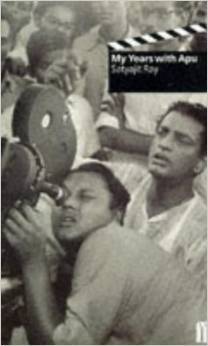
convinced me to read-
1) more non fiction by practitioners (aka people who have done things)
2) fewer by academics (aka people who read about things)
5/5 stars because i grew up reading ফেলুদা
the name drops are crazy. man has rabindranath tagore and ravi sankar on speed dial
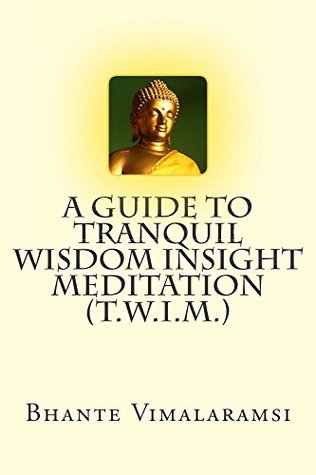
today meditation is synonymous with vipassana meditation, or breathwork practices, but actually there’s other kinds that might just be more beginner-friendly??
enter metta (loving kindness) meditation-
pause for a second, and conjure an image of puppies and toddlers frolicking in the sun. if that doesn’t make u feel warm and fuzzy i’m afraid you’re a psychopath and you may as well stop. reading.
for the rest of you - take that image, with all the warmth that shrouds it, and radiate it outwards. got it? ok now go sit on a mat for 30 minutes and become one with that feeling.
it’s still early days: i’ve done a single digit of practice sessions but so far-
i like metta.
however- is this for you?
honestly if this has piqued your interest in the least i recommend just trying it out.
T.W.I.M. is incredibly readable and concise as manuals go, and you can breeze through it in one sitting ~30m)
;now if i sounded authoritative so far i am sorry for misleading you. i dont know what i’m talking about. for legible and accurate explanations, pls refer to chatgpt.)

I don't force myself to finish books anymore. In the case of Siddhartha, I didn't have to. This post is a collage of the passages that resonated most with me.
On the distinction between language and knowledge:
The Brahmins and their holy books knew everything, everything[...]but was it worth while knowing all these things if they did not know the one important thing, the only important thing?
On the Buddha:
He was not very curious about the teachings. He did not think they would teach him anything new.
But he looked attentively at Gotama’s head, at his shoulders, at his feet, at his still, downward-hanging hand, and it seemed to him that in every joint of every finger of his hand there was knowledge; they spoke, breathed, radiated truth.
On the incommunicability of experience:
You have reached the highest goal which so many thousands of Brahmins and Brahmins’ sons are striving to reach. You have done so by your own seeking in your own way, through thought, through meditation, through knowledge, through enlightenment. You have learned nothing through teachings, and so I think, O Illustrious One, that nobody finds salvation through teachings. To nobody, O Illustrious One, can you communicate in words and teachings, what happened to you in the hour of your enlightenment. That is why I am going on my way — not to seek another and better doctrine, for I know there is none, but to leave all doctrines and all teachers and to reach my goal alone — or die.
On organized religion:
If I were one of your followers, I fear that it would only be on the surface, that I would deceive myself that I was at peace and had attained salvation, while in truth the Self would continue to live and grow, for it would have been transformed into your teachings, into my allegiance and love for you and for the community of the monks.*
On Wu-Wei:
It is the same when Siddhartha has an aim, a goal. **Siddhartha does nothing; he waits, he thinks, he fasts, but he goes through the affairs of the world like the stone through water, without doing anything, without bestirring himself; he is drawn and lets himself fall. He is drawn by his goal, for he does not allow anything to enter his mind which opposes his goal.Everyone can perform magic, everyone can reach his goal, if he can think, wait and fast.
On the illusion of possession:
Kamaswami: But how will you live if you are without possessions?
Siddhartha: I have never thought about it, sir. I have been without possessions for nearly three years and I have never thought on what I should live.
Kamaswami: So you have lived on the possessions of others?
Siddhartha: Apparently. The merchant also lives on the posesssions of others.
On experiential learning:
It is a good thing to experience everything oneself, he thought. As a child I learned that pleasures of the world and riches were not good. I have known it for a long time, but I have only just experienced it. Now I know it not only with my intellect, but with my eyes, with my heart, with my stomach. It is a good thing that I know this.
On seeking truth:
It is a good thing to experience everything oneself, he thought. As a child I learned that pleasures of the world and riches were not good. I have known it for a long time, but I have only just experienced it. Now I know it not only with my intellect, but with my eyes, with my heart, with my stomach. It is a good thing that I know this.
On love:
He had considered himself rich and happy when the boy had come to him, but as time passed and the boy remained unfriendly and sulky, when he proved arrogant and defiant,[...] Siddhartha began to realize that no happiness and peace had come to him with his son, only sorrow and trouble. But he loved him and preferred the sorrow and trouble of his love rather than happiness and pleasure without the boy.
On altruism:
Do you then really think that you have committed your follies in order to spare your son them?[...]Do you think, my dear friend, that anybody is spared this path? Perhaps your little son, because you would like to see him spared sorrow and pain and disillusionment? But if you were to die ten times for him, you would not alter his destiny in the slightest.
On letting go:
But let him go, my friend, he is not a child any more.[...]He is doing what you yourself have neglected to do. He is looking after himself; he is going his own way.
On the cycle of life:
He remembered how once, as a youth, he had compelled his father to let him go and [[join the ascetics]], how he had taken leave of him, how he had gone and never returned. Had not his father also suffered the same pain that he was now suffering for his son?
Siddhartha looked into the river and saw many pictures in the flowing water. He saw his father, lonely, mourning for his son; he saw himself, lonely, also with the bonds of longing for his faraway son; he saw his son, also lonely, the boy eagerly advancing along the burning path of life’s desires, each one concentrating on his goal, each one obsessed by his goal, each one suffering.
On seeking:
As a result of your seeking you cannot find.[...]Seeking means: to have a goal; but finding means: to be free, to be receptive, to have no goal. You, O worthy one, are perhaps indeed a seeker, for in striving towards your goal, you do not see many things that are under your nose.
On the journey:
It is not possible for one person to see how far another is on the way; the Buddha exists in the robber and dice player; the robber exists in the Brahmin. During deep meditation it is possible to dispel time, to see simultaneously all the past, present and future, and then everything is good, everything is perfect, everything is Brahman. Therefore, it seems to me that everything that exists is good – death as well as life, sin as well as holiness, wisdom as well as folly.
Echoing Wittgenstein:
Words do not express thoughts very well. They always become a little different immediately they are expressed, a little distorted, a little foolish.[...]Perhaps that is what prevents you from finding peace, perhaps there are too many words, for even salvation and virtue, Sansara and Nirvana are only words, Govinda. Nirvana is not a thing; there is only the word Nirvana.
On what's important:
It seems to me, Govinda, that love is the most important thing in the world. It may be important to great thinkers to examine the world, to explain and despise it. But I think it is only important to love the world, not to despise it, not for us to hate each other, but to be able to regard the world and ourselves and all beings with love, admiration and respect.