The greatest alphabet
Hangul, the Korean alphabet, is the greatest writing system that humanity has invented.
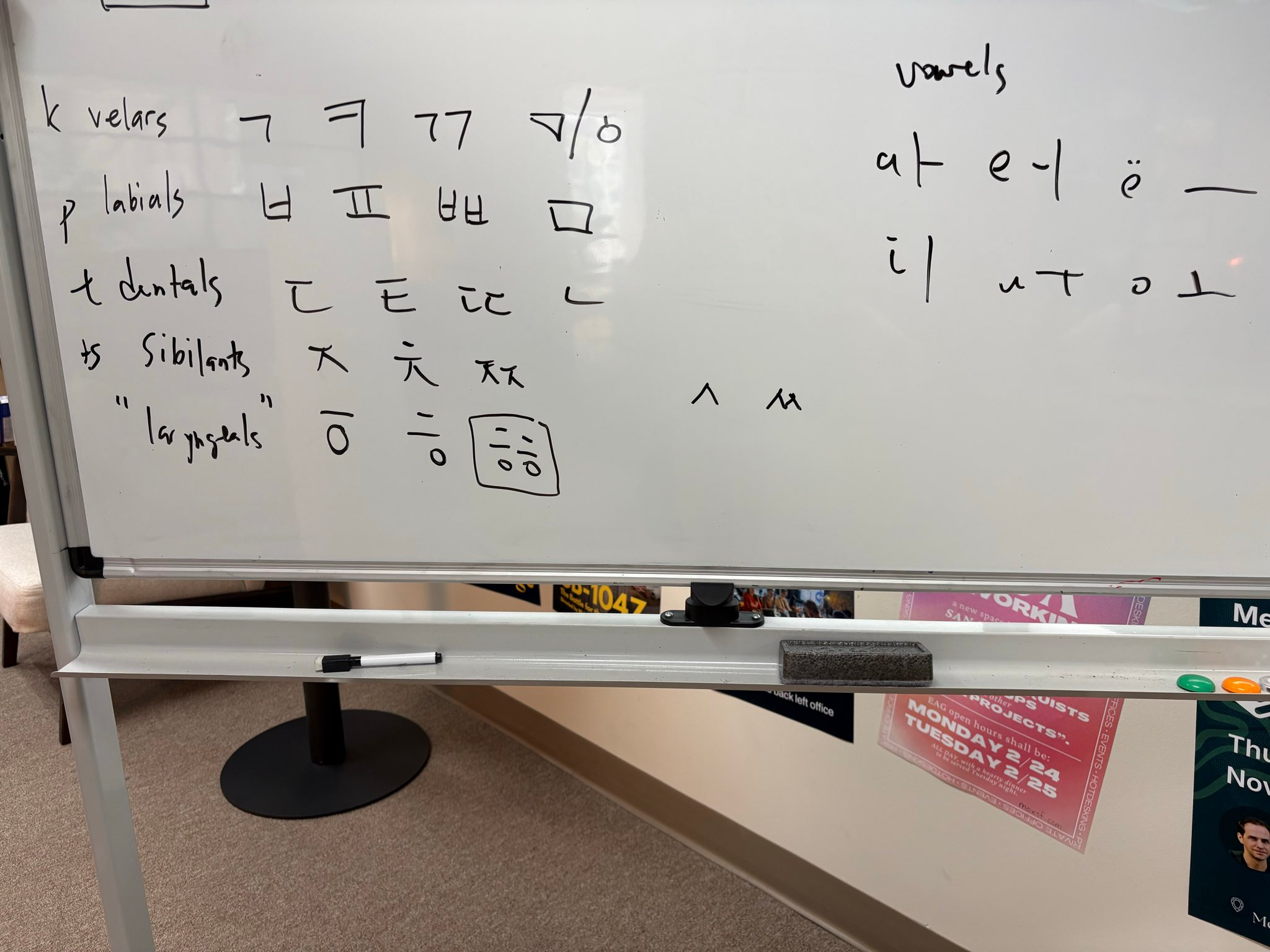
My friend A is a huge linguistics nerd. He explained how Hangul works to me in 5 minutes after dinner one night.
I was shocked by its simplicity. And the fact that this modern, easy-to-learn alphabet is the official writing system of South (and North) Korea was an awesome reminder that we can have nice things.
Hangul was created under the Joseon-era king Sejong the Great in 1443 and formally promulgated in 1446 to make written Korean more accessible to ordinary people. Unfortunately, it was looked down on by much of the elite for centuries, and only became the dominant Korean writing system in the modern era.
What makes Hangul so intuitive? That’s what this post is about!
It blew my mind to learn how the graphemes (shapes) were developed.
To understand the basis of their alphabet, it’s helpful to step back and look at how we produce sounds
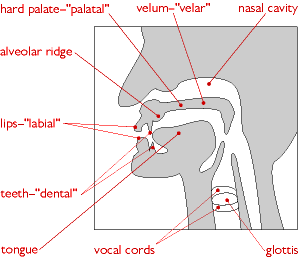
The mildly foreign looking words are Latin.
Here’s a mapping of the Latin roots to English:
| Class | Latin Root | English |
|---|---|---|
| velars | velum | palate |
| labials | labium | lip |
| linguals | lingua | tongue |
| dentals | dent | tooth |
| guttural | guttur | throat |
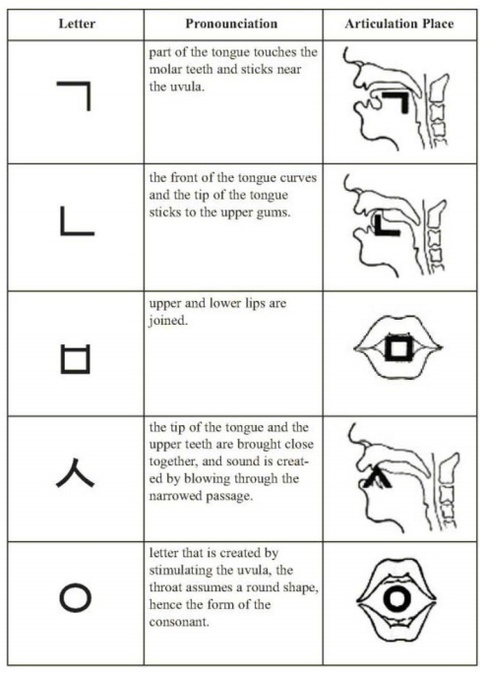
Now, here’s where it gets interesting: the shapes of the consonants in Hangul are based on human speech organs!
Let’s add another column to our table.
| Class | Latin Root | English | Letter |
|---|---|---|---|
| velars | velum | soft palate | ㄱ |
| labials | labium | lip | ㅁ |
| linguals | lingua | tongue | ㄴ |
| dentals | dent | tooth | ㅅ |
| guttural | guttur | throat | ㅇ |
Some of these are more intuitive than others, but you can sort of see how the form of the letter maps to the respective body part.
This becomes quite obvious when we try to produce these sounds!
| Class | Latin Root | English | Letter | Sounds |
|---|---|---|---|---|
| velars | velum | soft palate | ㄱ | g/k |
| linguals | lingua | tongue | ㄴ | n |
| labials | labium | lip | ㅁ | m |
| dentals | dent | tooth | ㅅ | s |
| guttural | guttur | throat | ㅇ | silent / ng |
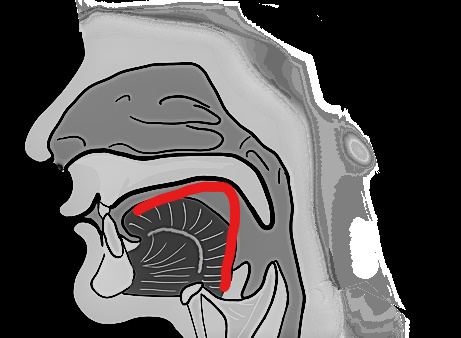
For instance, make a k sound with your mouth. If you pay attention, you’ll notice the back of your tongue rising to touch the velum.
What’s the Hangul shape for that again?
Oh yeah, it’s ㄱ.
Okay, now we have some base consonants. What about the rest of them?
We can derive them by adding strokes to the base shapes!
As an example, consider the velars:
| Letter | Sound |
|---|---|
| ㄱ | g/k |
| ㅋ | kʰ |
| ㄲ | kk |
/kʰ/ is an aspirated k, it’s pronounced with a puff of air.
kk represents the Korean “tense” consonant. There isn’t quite an English equivalent.
Here’s a summary:
| Historical class | Letters | Rough sounds |
|---|---|---|
| velars | ㄱ ㅋ ㄲ | g/k, aspirated k, tense kk |
| linguals | ㄴ ㄷ ㅌ ㄹ ㄸ | n, d/t, aspirated t, r/l, tense tt |
| labials | ㅁ ㅂ ㅍ ㅃ | m, b/p, aspirated p, tense pp |
| dentals | ㅅ ㅈ ㅊ ㅆ ㅉ | s, j, ch, tense ss, tense jj |
| gutturals | ㅇ ㅎ | silent/ng, h |
Okay, we’ve gone over all the consonants.
We’ll leave the vowels for next time.
Notes:
- The English sounds are approximate, as Korean sounds do not always map perfectly to English ones
- Modern phonetics uses different classes from the ones above, which were used historically for Hangul 600 years ago
Further reading: